Holding the Space
Holding space for others starts with taking care of your own.
One of the less obvious parts of being a strategic facilitator is staying physically and mentally fit enough to hold a room.
It takes more energy than you might think.
When you facilitate a group, you’re not just standing in front of people and asking questions. You’re paying attention to the room, reading the energy, listening for what is being said — and what isn’t. You’re keeping track of the process, the time, the dynamics and the purpose, often all at once.
And when the work is strategic, the stakes can be high.
People are making decisions. Challenging assumptions. Talking about change, direction, identity and the future of an organisation. That requires presence. Real presence.
For me, that means taking care of the physical side of the equation too.
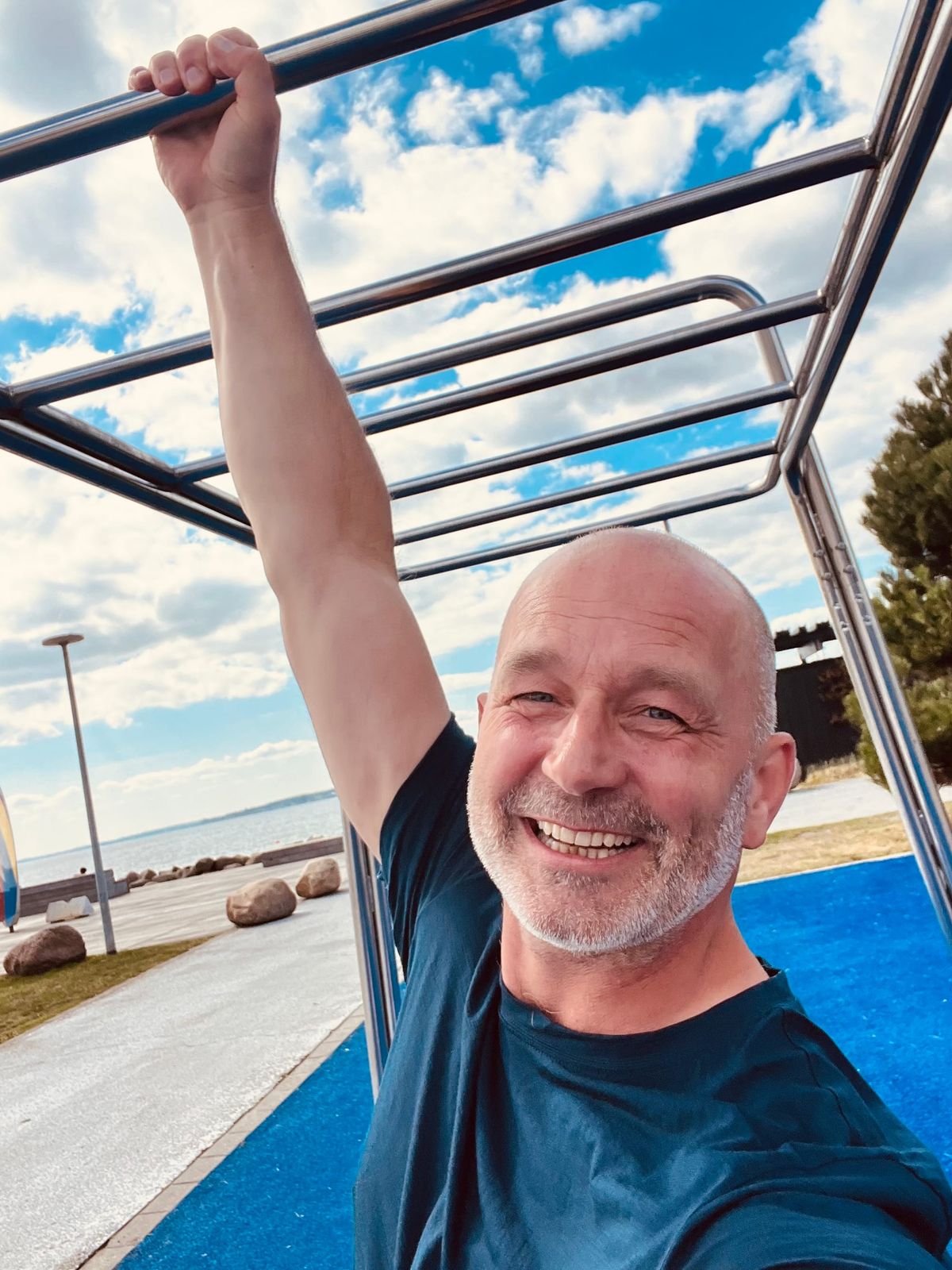
I like to train calisthenics outdoors.
Sweden, where I live, is particularly good at outdoor fitness. There seem to be outdoor gyms everywhere — tucked into parks, beside running tracks, near forests and by the water. I’ve always had the feeling that Swedes are a little better than Danes at turning the outdoors into a natural part of everyday life.
I’m happy to follow their lead.
There is something about training outside that I don’t get from a gym.
I feel the ground beneath my feet. The wind. The cold. My body working. My breath changing. And somewhere between pull-ups, dips and whatever exercise I’m working on that day, my mind starts moving too.
It’s one of the places where I think best.
Not because I’m trying to think.
Quite the opposite.
When the body is occupied, the mind gets a little room to wander. A problem I’ve been turning over might suddenly look different. A question for an upcoming workshop becomes clearer. A connection appears between two things that didn’t seem connected before.
I often leave a workout with a few good thoughts that I didn’t arrive with.
Perhaps that is another reason I value the practice.
Good facilitation requires you to be present for other people. To hold a space without filling it. To stay attentive without taking over. To have enough energy to remain curious when the conversation gets difficult or complex.
That takes something out of you.
So I’ve come to think of physical training as part of my work as a facilitator — not because every part of life needs to become productive, but because I want to be able to bring my whole self into the room.
The ground. The wind. The body. The mind. The inner fire.
And sometimes, somewhere between the last set and the walk home, the next workshop begins to take shape.