The Born Pioneer
For Benedikt Schnürr, the role of pioneer in the wines of the future is not just something he inherited from his parents. It is the very core of his personality — and he knows it.
Imagine being barely 26 years old and knowing exactly what you want to spend the rest of your life doing and what your special role is. All without ever feeling the need to challenge it by moving away and realizing where you truly belong. You have simply always known it.
But that’s not everything. Your chosen path also lies in direct continuation of what your parents have built. You actually live in the same place where you ran around playing as a child, and your job is to carry the legacy forward in a synthesis of the family’s spirit and your own.
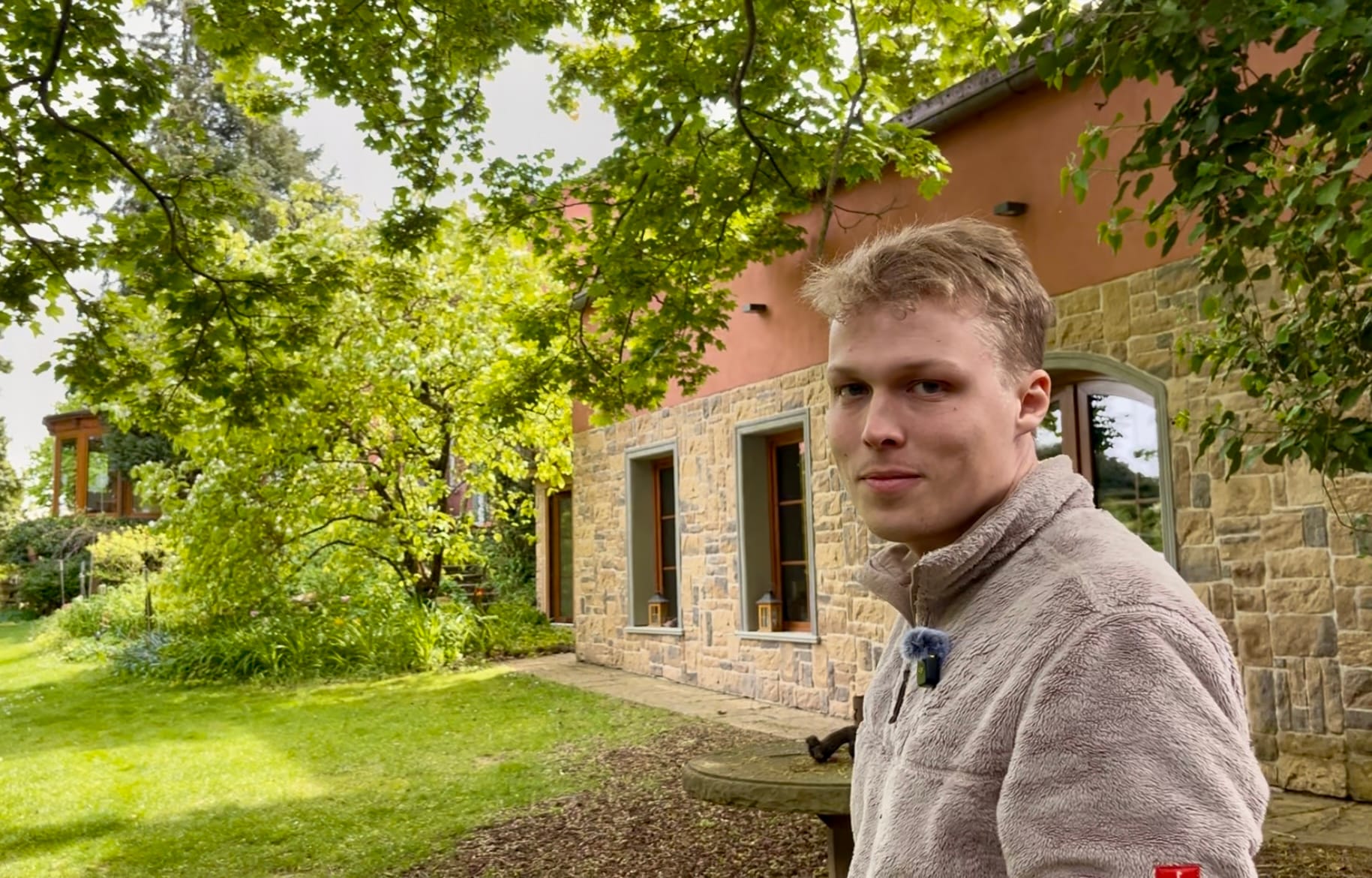
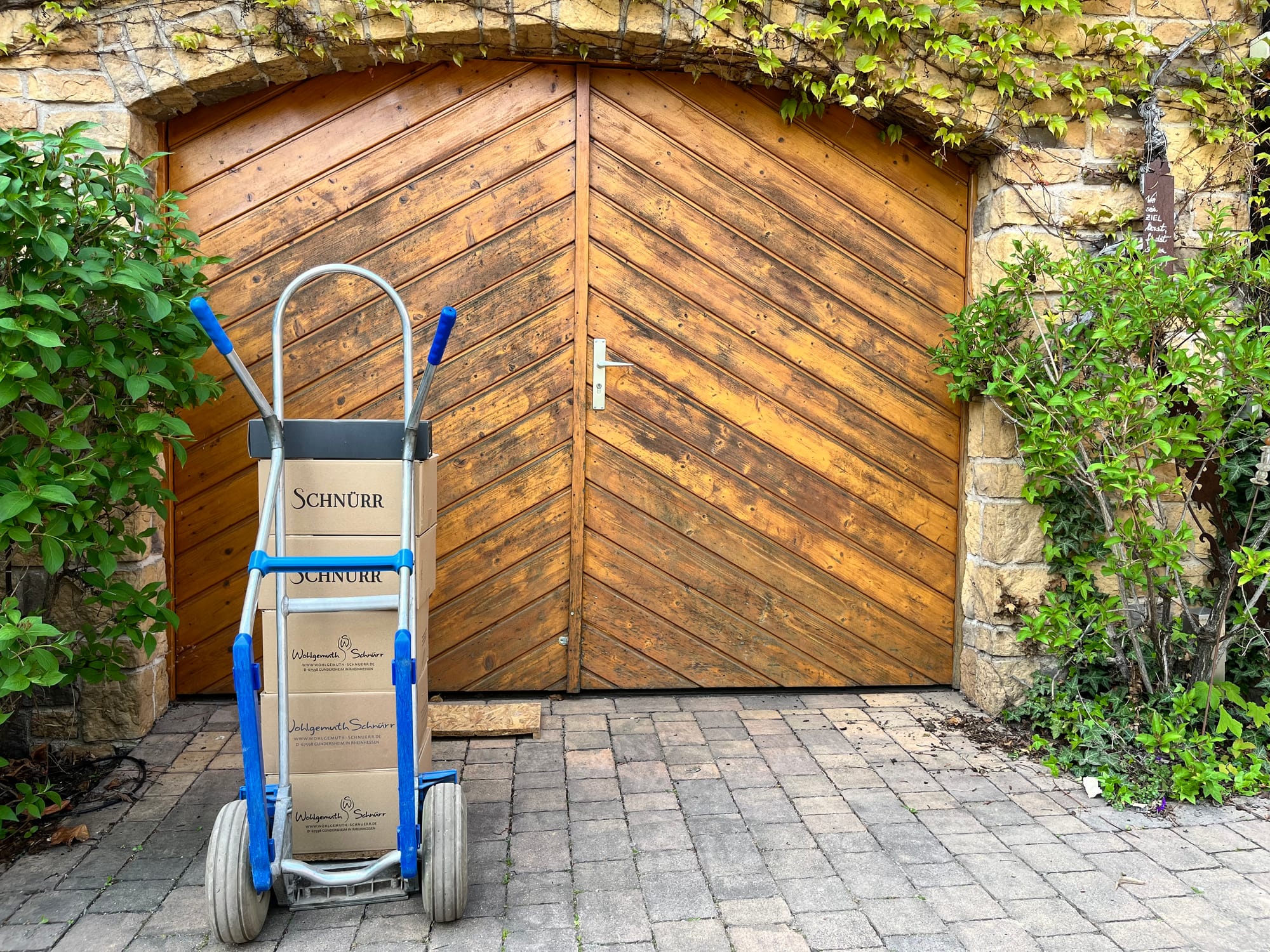
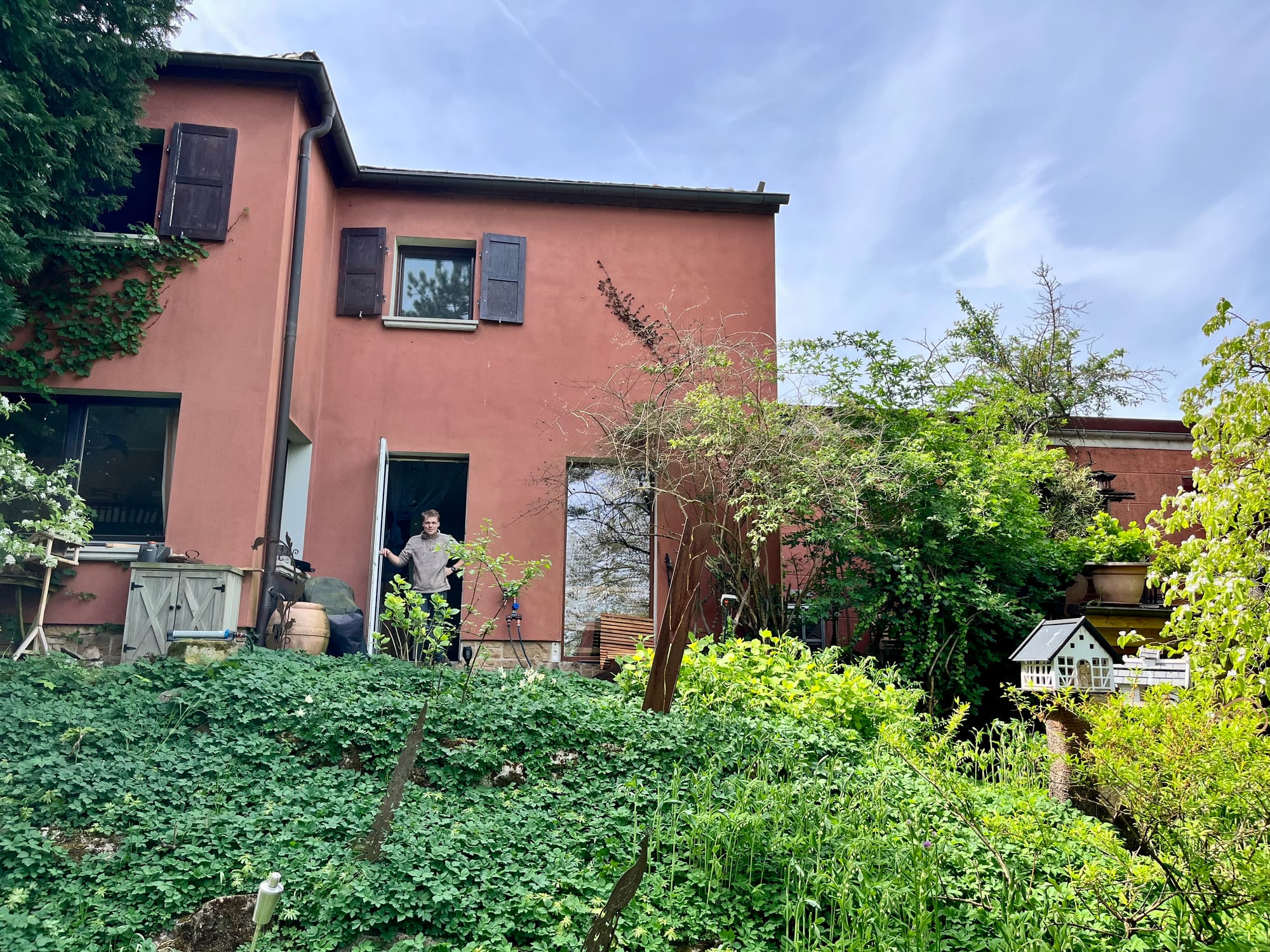
This is the reality for Benedikt Schnürr, the second generation of the Schnürr winery, located in the village of Gundersheim in the heart of Germany’s largest wine region, Rheinhessen.
As the eldest of three brothers, he officially took over the management of the winery from his parents Andreas and Alexandra a year ago, after having completed his studies in viticulture at Geisenheim University less than an hour’s drive from the winery.
It is the only place Benedikt has lived besides his childhood home in Gundersheim — something he is perfectly happy with.
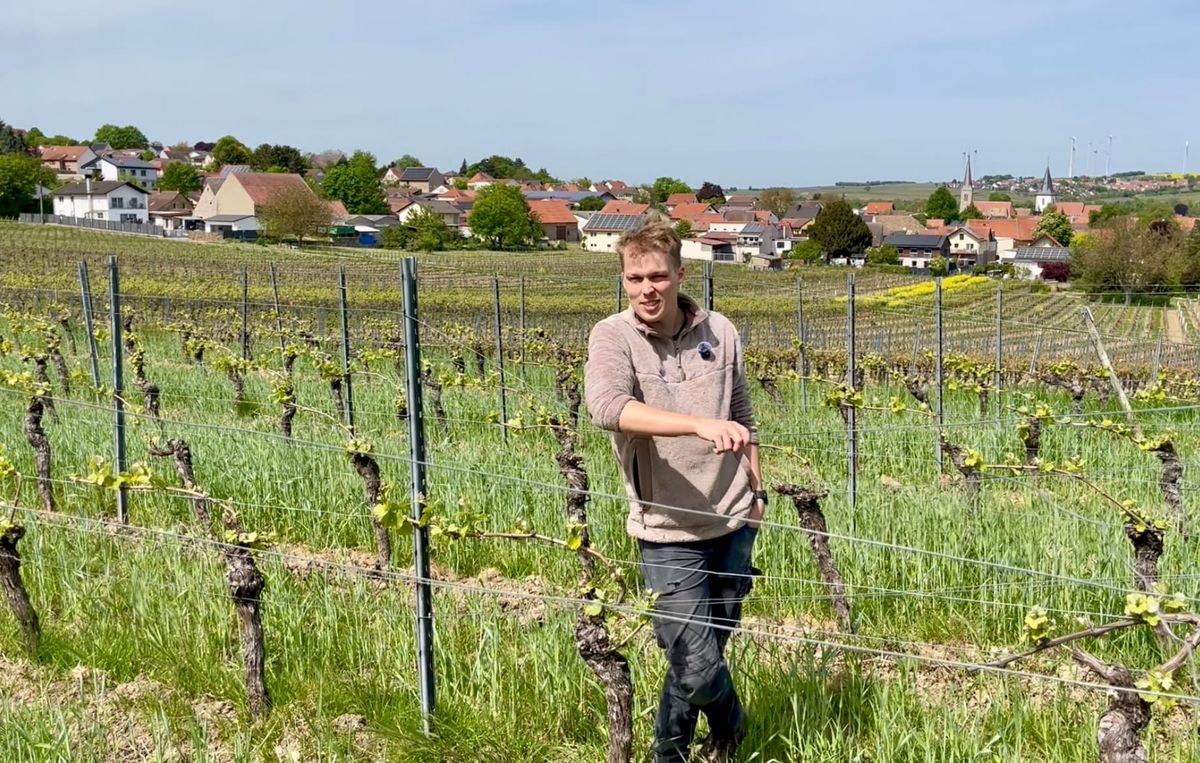
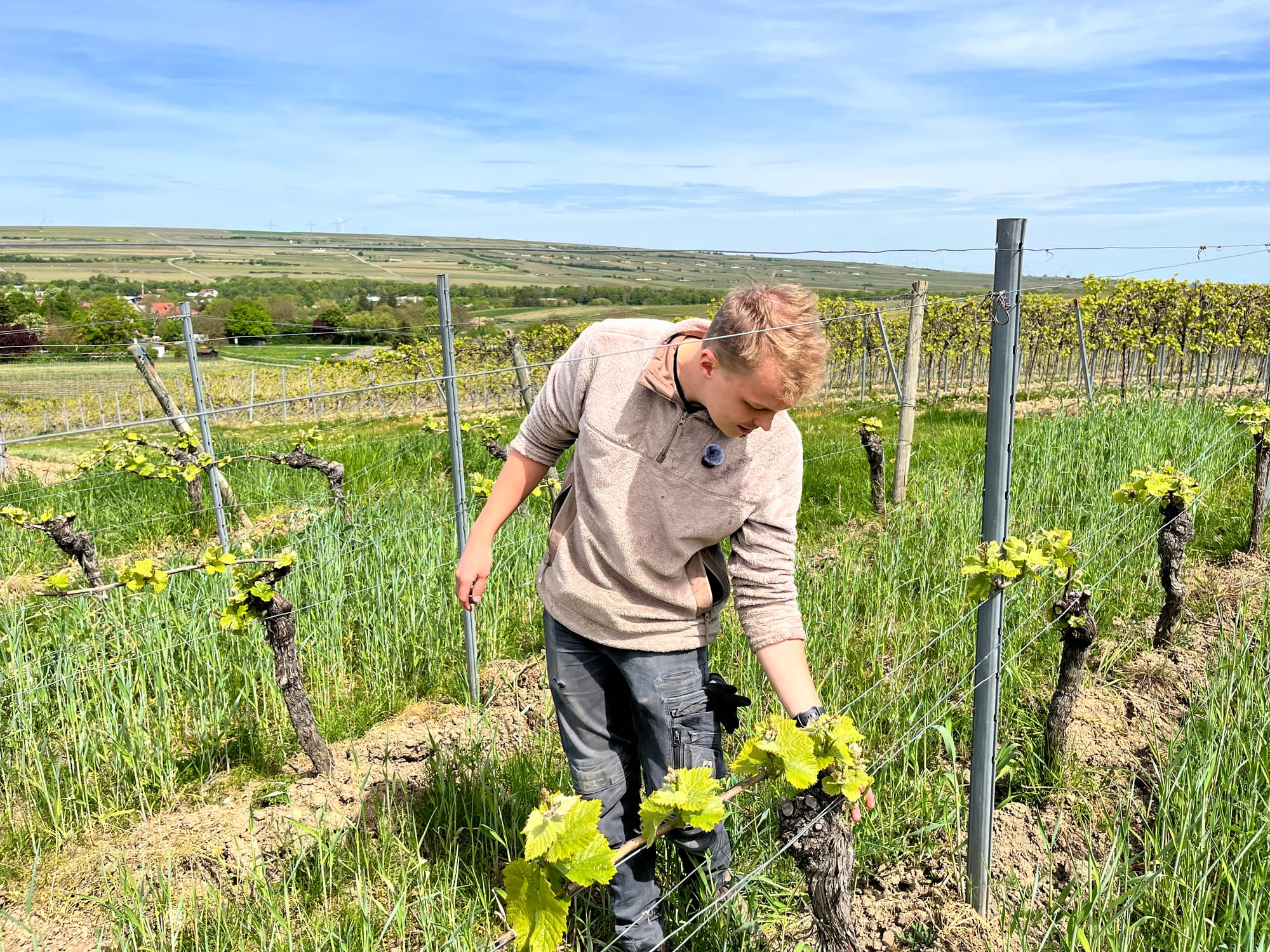
“I have everything I need here in the village to live with a high quality of life in mind. I lack nothing, and I love the freedom that comes with living here. I can spontaneously decide whether I want to spend the day in the vineyard, in the cellar, or take a walk in the forest. And if I feel like going into the city, there are plenty of options in the area,” he says while leaning over one of the steel wires that keep the vines growing in perfectly straight rows.
Future and Tradition
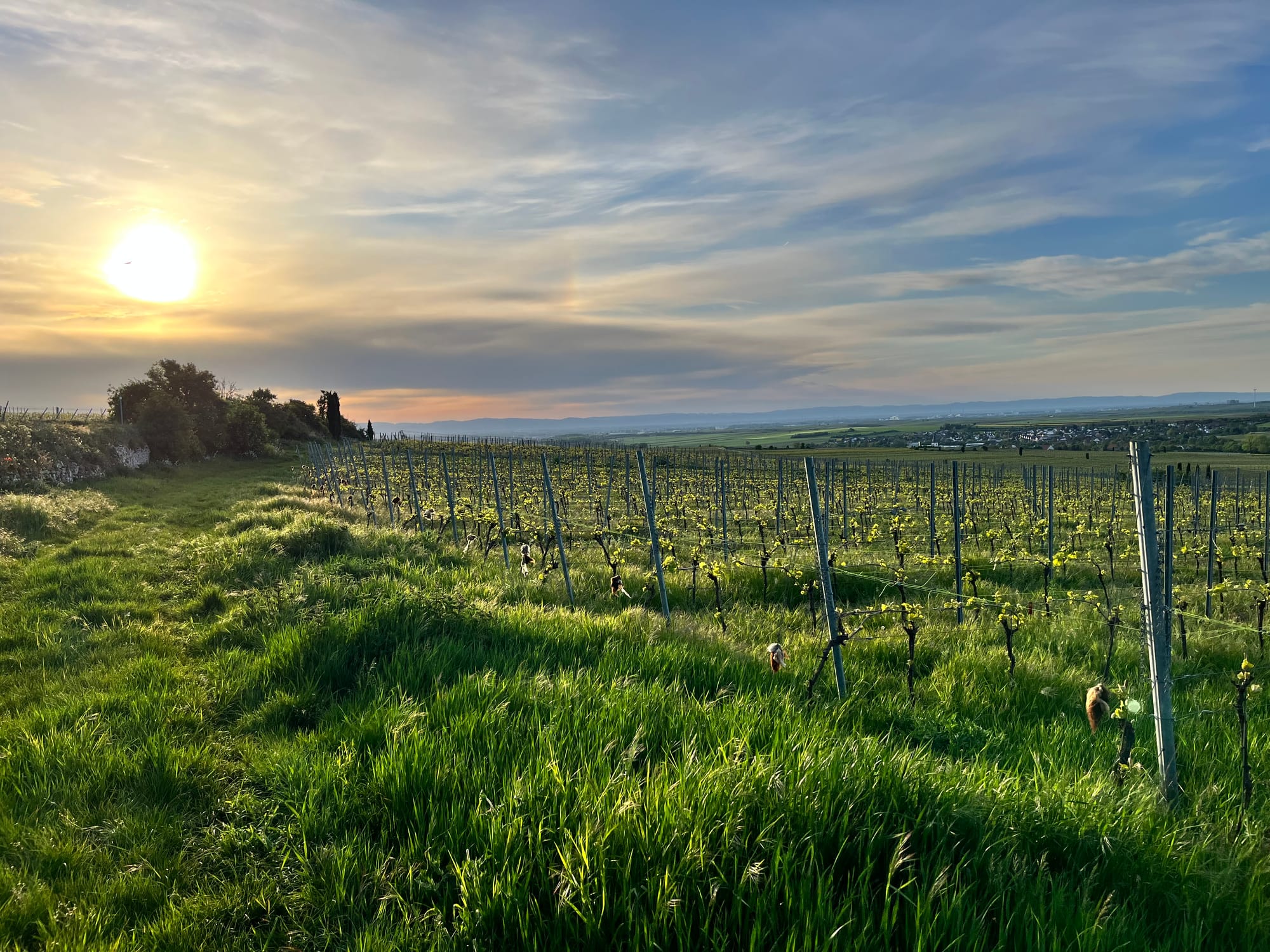
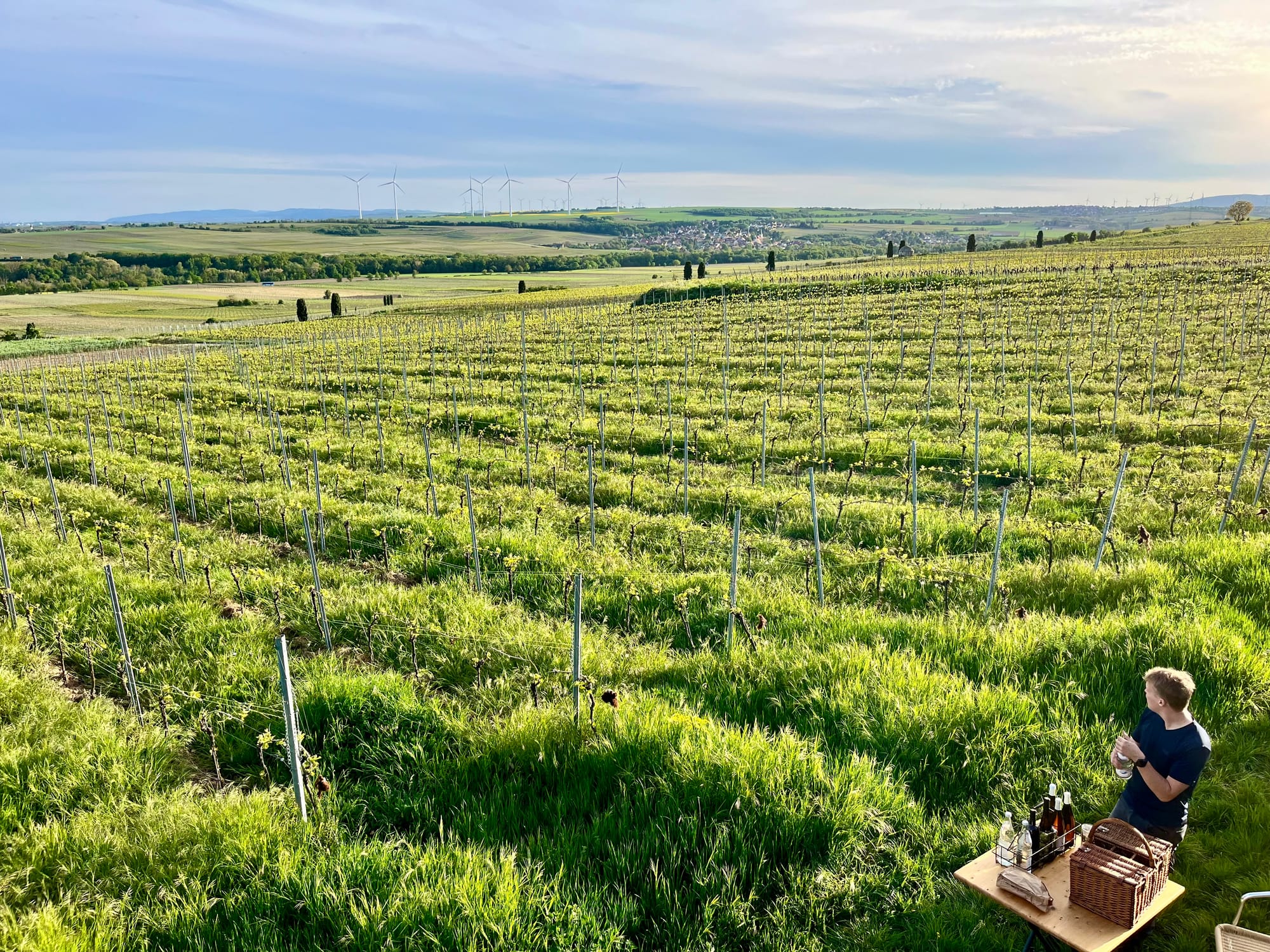
We are standing in one of the family’s vineyards a few hundred meters outside the village, which forms the backdrop for his words. Forty-five-year-old Pinot Noir vines grow in the field, and it is one of the classic grape varieties Schnürr uses in its portfolio despite the winery’s dedicated focus on new, fungus-resistant grape varieties — the so-called PiWi grapes.
Around 80 percent of Schnürr’s production consists of PiWi wines with grape names such as Calardis Blanc, Sauvinac, Pinotin, Cabertin, and Muscaris. Not exactly household names yet, but ones that will likely be common in 20–30 years.
Because if wine production in general is to develop in a more sustainable direction, the path through new grape varieties is unavoidable. This pioneering work has been the Schnürr family’s dedicated focus since they took over the winery in 2000.
At the same time, they find it equally important to honor tradition when it makes sense, which is why the family cultivates a few classic grape varieties worth preserving.
“I love the new grape varieties, but there’s nothing wrong with classic ones like Pinot Noir, Chardonnay, Pinot Blanc, and Riesling. There’s a reason they’ve become so famous — they produce great wines. We just grow them in our own way by experimenting with different techniques that give the wines new expressions. There are incredibly many screws you can turn when making wine, and I really love that process,” he says.
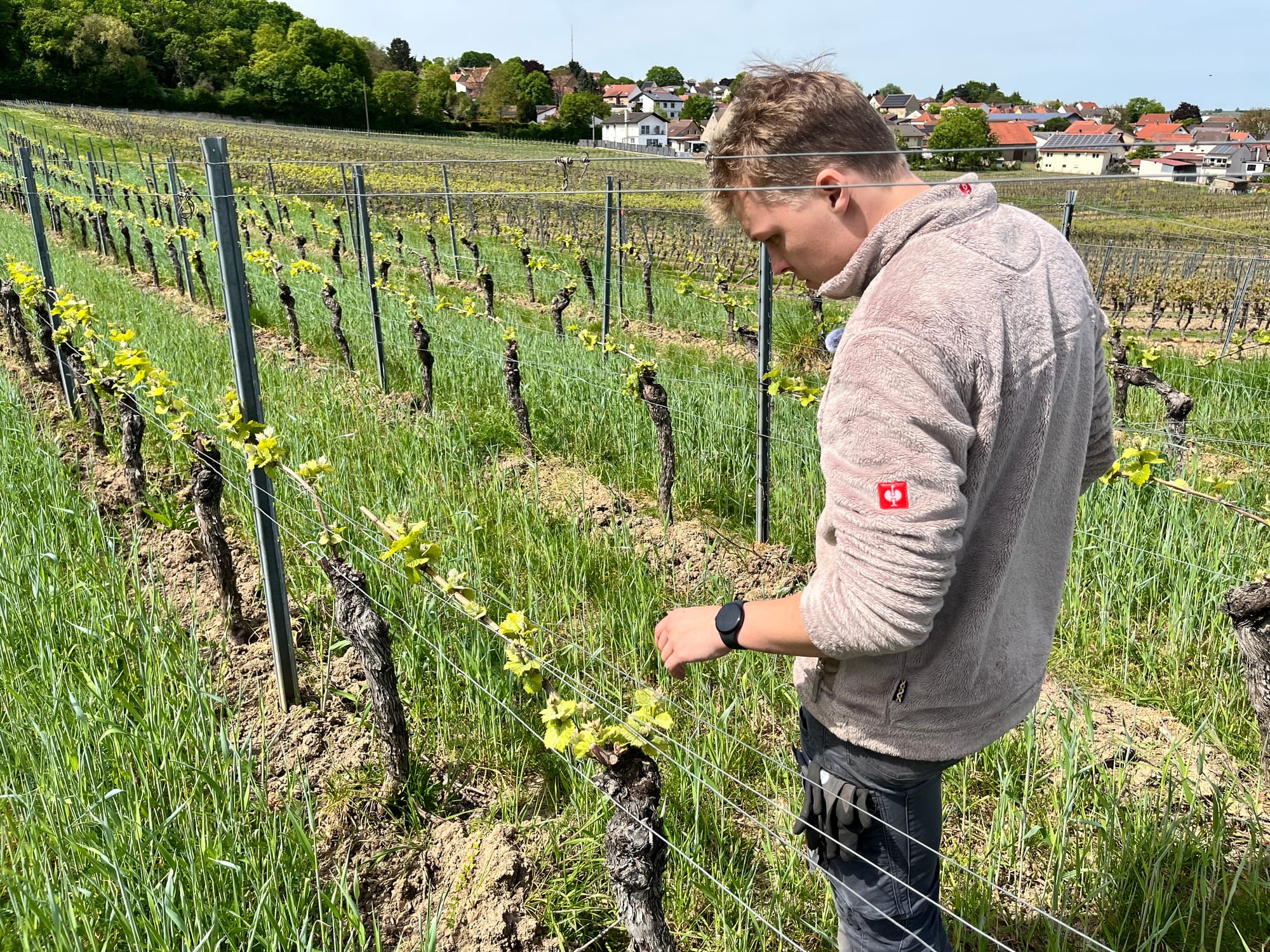
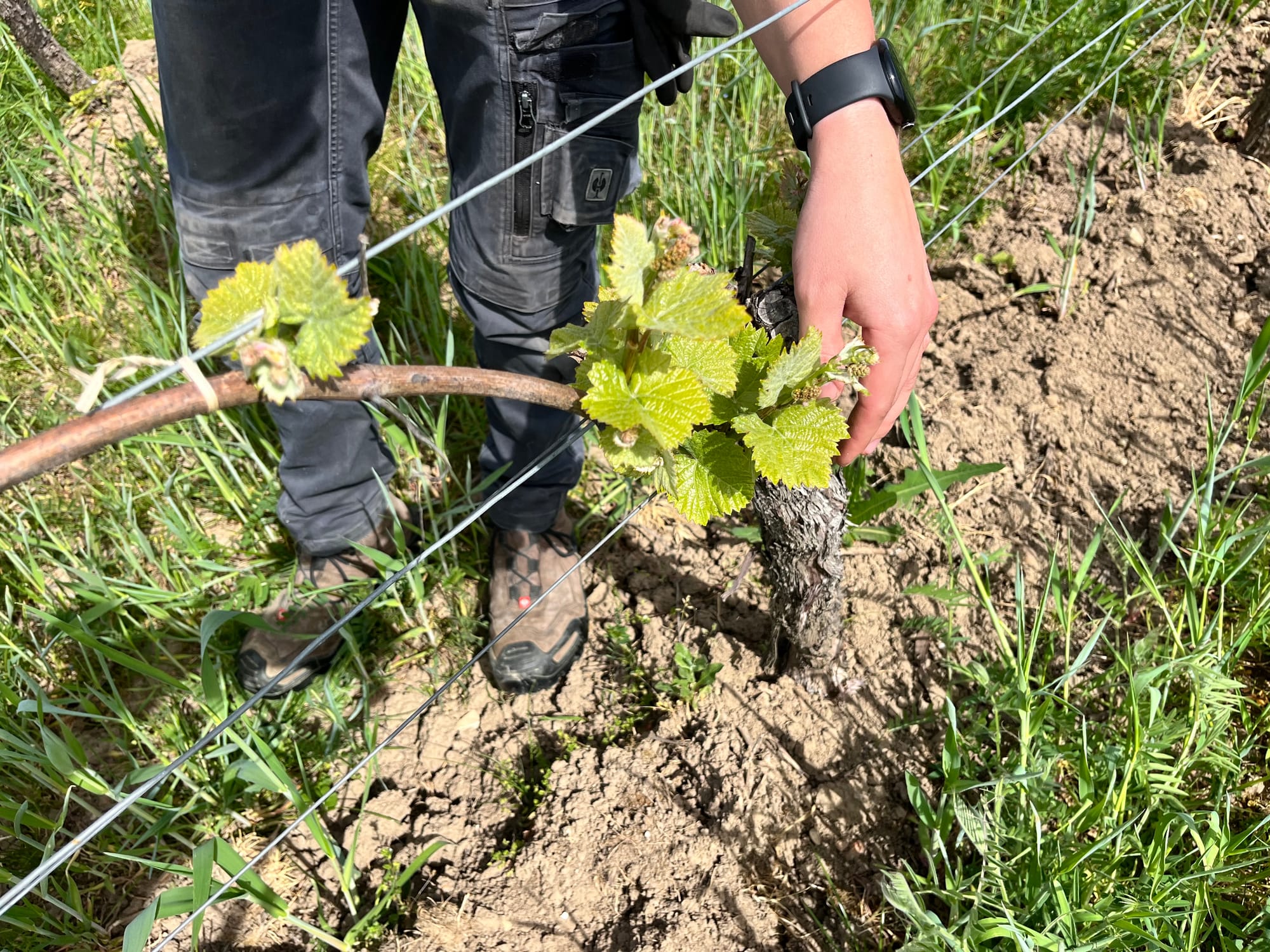
Between the rows of vines grows knee-high wheatgrass, which is somewhat unusual for a vineyard, but it is yet another of Benedikt’s innovative methods. The wheatgrass is a local crop that doesn’t need to be brought in from outside, and thus fits perfectly into Schnürr’s philosophy of maximum sustainability in production.
The idea with the wheatgrass is to let it grow to about chest height, after which it is rolled flat so it forms a moisture-retaining carpet over the soil between the rows. This way, they avoid having to irrigate the vineyards artificially.
“I like the idea of a local ecosystem where everything works in synergy with each other. It can be hard to explain because it’s largely driven by feeling, but for me, that’s exactly what sustainability is about. A simple focus on what your soil, your vines, and the ecosystem around them need,” says Benedikt.
Roots and Intellect
As I watch him stand there talking on his own vineyard in front of the village of his childhood, I can’t help but draw a parallel between his sustainability philosophy in winemaking and his own life.
In a way, he has simply treated himself like he treats his vines, and that has led to the decision to take over the winery and stay in Gundersheim. He sees himself as part of a local ecosystem.
Not that this is inherently unusual. Many other younger generations of winemakers make the same choice, and in that light, Benedikt Schnürr is simply following an old tradition.
Nevertheless, it has a sharper dimension with him than with other winemakers I have met, and I try to gain a deeper understanding of it during my visit.
Perhaps it is his special pioneering spirit combined with his high intellect? He is a lightning-fast thinker, and he could easily have chosen the path of any academic field that interested him.
Or perhaps it is his natural leadership qualities and ability to maintain strategic focus over time, together with his approachable personality? He can talk to anyone, and there is not a trace of arrogance or prejudice in his attitude. On the other hand, he has no hesitation when setting guidelines for what he wants from his employees. He gives them clear instructions and a clear direction. He could without a doubt lead a larger organization.
With several major German cities such as Frankfurt, Stuttgart, and Cologne within easy reach — or the nearby university town of Heidelberg — there would be ample opportunity to build a modern career in cities of glass and steel. But that was never on his radar. Not even as a consideration.
“I have never tried anything else, and I have never wanted to. I have always wanted to be a winemaker, and that calling has never left me. So it is incredibly difficult for me to relate to what it would be like to have a different career. My roots have always been here, and I simply never wanted anything else,” says Benedikt.
Freedom and Role-Playing
This does not stop him from seeking inspiration elsewhere, including areas not closely related to winemaking. He loves metal music, for example, because it is such a varied genre with a very symphonic expression. He often listens to it on his many trips around the world for wine events, or when driving on the German autobahn at what he himself calls a relatively good speed.
His great hobby, however, is live-action role-playing (LARP), where he regularly meets up with several thousand like-minded people for huge events. Over 3–5 days, they immerse themselves in a fantasy world with various themes — typically medieval in character with swords, shields, spears, and bows, but not tied to any specific historical period. It is more like a universe in the style of J.R.R. Tolkien’s "The Lord of the Rings".
Everyone is dressed up and has fixed characters, and no one knows each other’s real names — not even when they meet as friends in real life. They always use their role-playing names, and Benedikt’s is “Baren Earl of the Fjordlands”. In that role he commands over 60 men when the game is underway.
“For me, it’s a feeling of freedom to be in that world. I turn off my phone and step away from the role as a winemaker for a few days. It lets me think about something else and gives me air and energy for the everyday life waiting on the other side,” he says.
He cannot completely separate the fantasy world from reality, however. Together with a friend from the LARP scene, he has just launched a podcast titled “Zwischen Reben und Rüstung” — or in English, “Between Berries and Armour.”
In it, they talk about the intersection between their real-life characters and the world of imagination that both are drawn to.
“It basically takes up way too much of my time, but it’s also fun, and I’ve made some really good friends through it. Maybe it’s just my eternal urge to experiment showing up there too,” he says.
Space Travel and Innovation
There is no doubt that Benedikt is a pioneer because of the legacy from his parents. But that he is also, as an individual, the epitome of a person who thinks like a pioneer becomes crystal clear later the same evening as we sit around a campfire on top of Brunnenhäuschen.
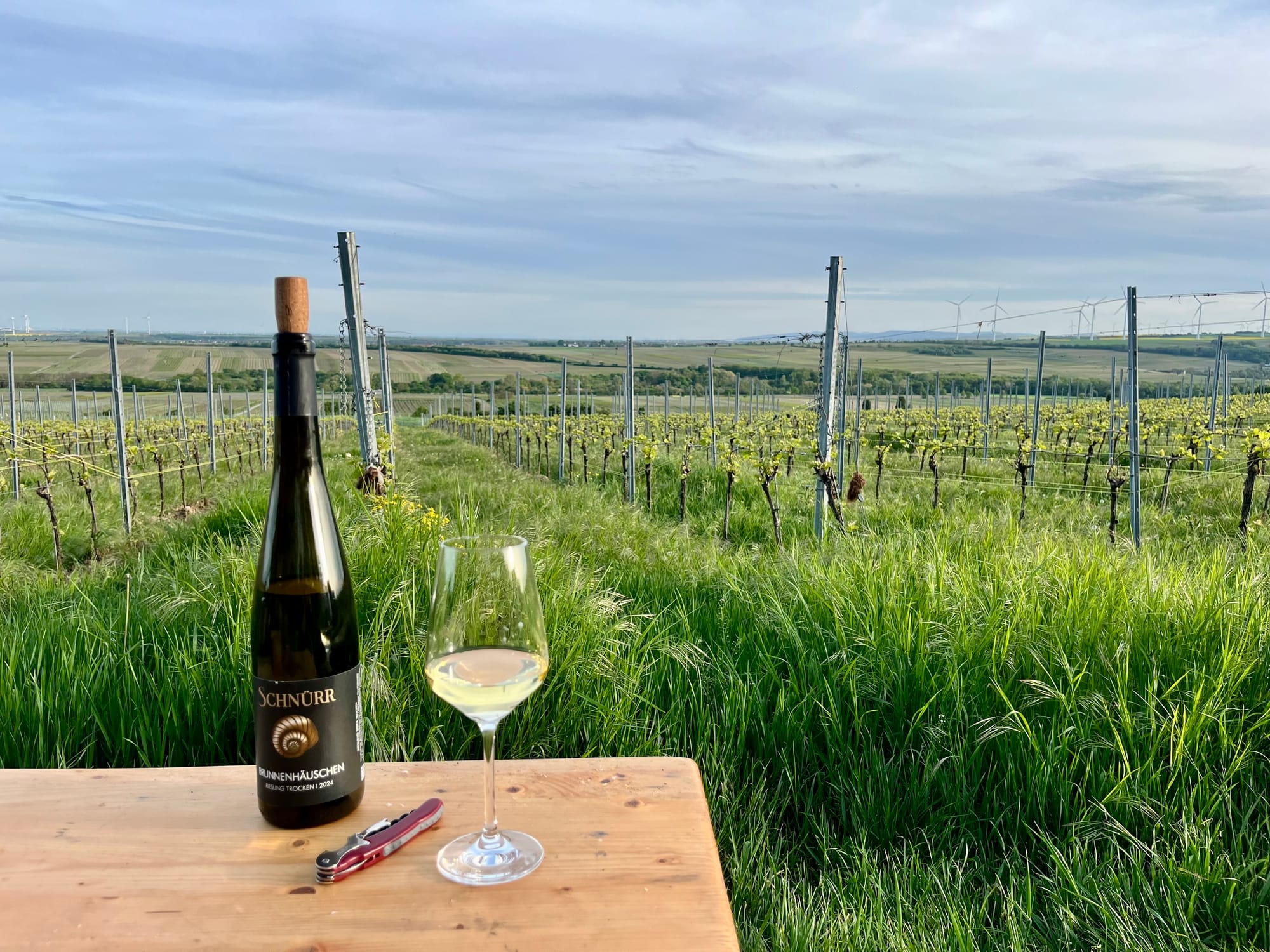
It is one of the three most prestigious vineyards in Rheinhessen — and thus in Germany — and Schnürr grows its Riesling there. In fact, it was the first wine Benedikt made on his own, and he has given it a wonderful twist of dried herbs that works beautifully with its floral aroma and refreshing acidity.
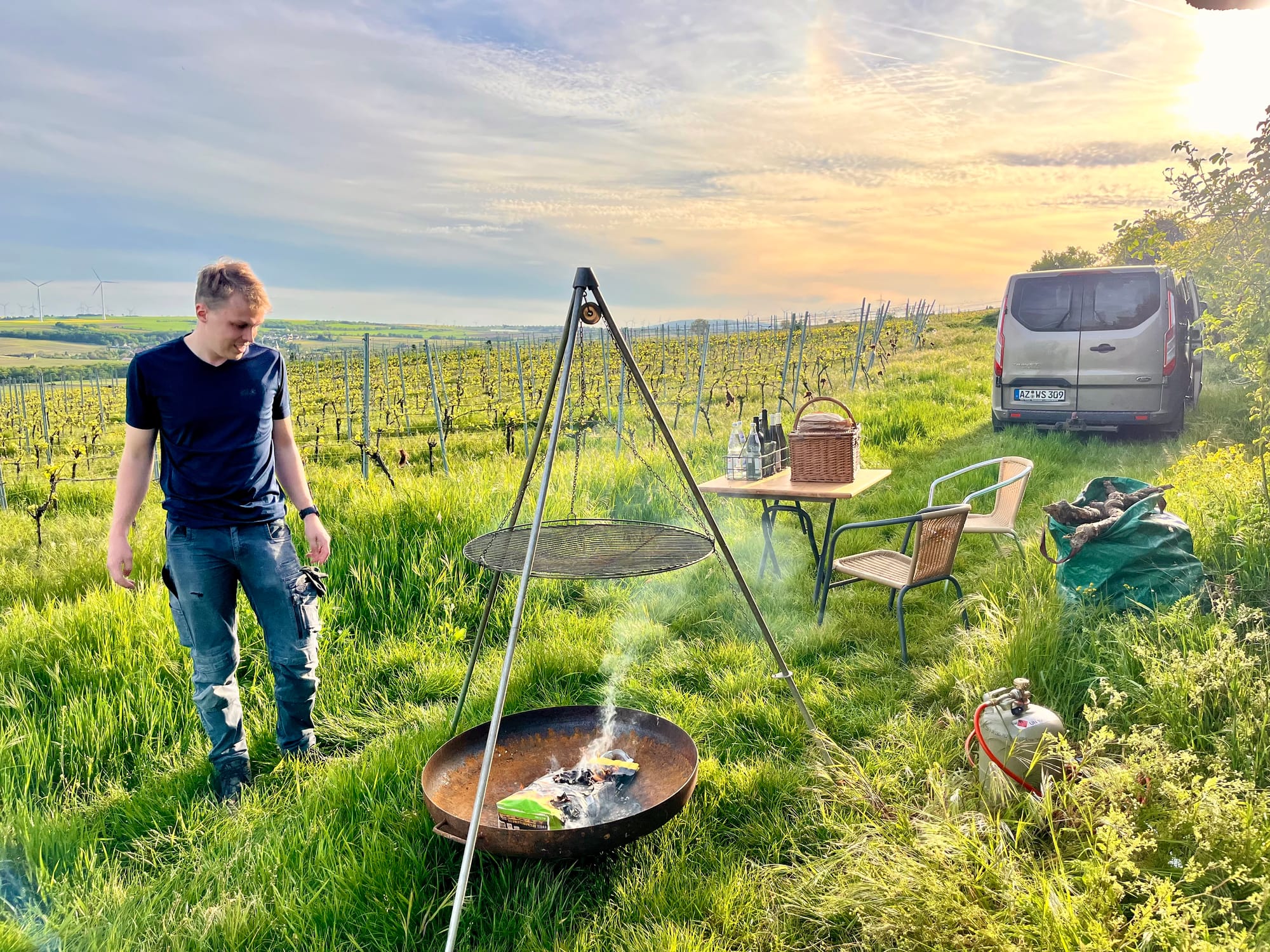
It also happens to be Benedikt’s favorite vineyard, and we drink his Riesling with grilled pork chops, sausages, and pork belly while enjoying a 180-degree view over Brunnenhäuschen, the valley below the vineyard, and the almost endless horizon.
It feels minimally grand to drink the wine grown on the very vineyard we are sitting on, and I let the feeling sink in as darkness falls and the rising moon shows its face.
Our conversation turns to the four American astronauts who have just been in orbit around the moon, and what an extraordinary thought it is that only a few weeks ago there were humans up there.
“I love space travel,” says Benedikt, letting the sentence hang over the flames of the fire before continuing, “and if we colonize Mars, I could definitely see myself going up there.”
His statement surprises me, and I ask how he would feel about living in a small enclosed habitat on a planet with a hostile atmosphere, when he is so attached to his vineyards.
“I would find a solution. It’s a question of innovation. There is always a way. That is my firm belief,” he says.
I press him a bit further. I am curious how far he is willing to take the thought. What about family? Maybe children? Would he make the choice on their behalf and turn them into Mars inhabitants along with him? And how would he use himself as a winemaker on Mars?
He replies that he of course feels responsible toward his family, but that he would gladly take his children toward new horizons if it made sense in context — for example, if humans had damaged this planet so badly that it could not be saved.
“I actually can’t really see why I wouldn’t go up there in such a situation,” he says.
Nature and Soul
It dawns on me that his self-understanding as a pioneer is not in itself tied to Gundersheim and the work with the wines here. It is merely the geographical foundation he has been given in this life, and he makes the most of it to fulfill his role.
But in reality, something much larger drives Benedikt Schnürr: the feeling of living in symbiosis with nature. Without that, he wouldn’t want to be here and would rather spend his time creating it somewhere else.
Because, as he says, it is the continuous process between humans and nature — with all its ups and downs — that gives a wine its personality. It is the journey you are on as a winemaker, and you live and breathe it every single day to balance your craft with wind and weather.
“It’s hard to define, but you become incredibly attached to your vineyard and how it is doing right now. Almost as if it were a person with feelings. I don’t know any other product that contains the same complex nuances, and that’s why I believe it’s fair to say that a wine has a soul. Because in the end, it is art,” he says.
I have heard this before from other winemakers, and it seems that this is how they view their special connection to nature in an attempt to explain the inexplicable.
It does, however, raise the question of whether he sees the vineyard as an extension of himself, or the other way around.
Benedikt thinks for a moment but concludes that it is the latter. That is, he is an extension of the vineyard. Because how could it be otherwise when you work with the forces of nature? There are no other options than to accept them as they present themselves and make the best of them.
Young and Old
We toast to the world of wine and take the last sips of Riesling. The fire has run out of wood, and the clear night sky is scattered with stars that supplement the moon's glow.
It is time to go to bed. Benedikt rolls out his sleeping bag in the van so he doesn’t have to pitch a tent — a choice he regrets the next morning.
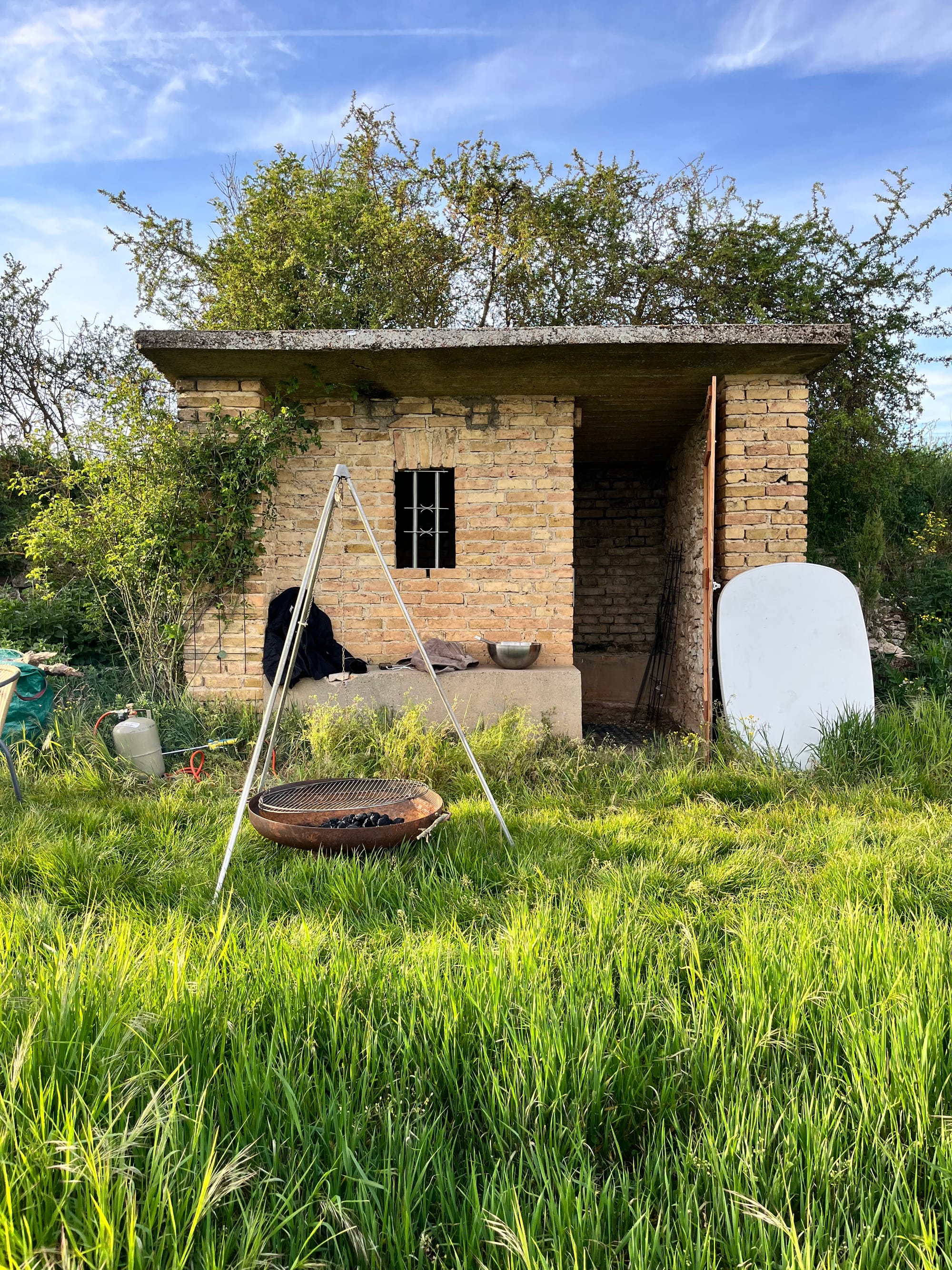
I crawl into my sleeping bag inside a small stone hut built for sleeping when working in the vineyard. It is dry and dusty, and I feel a fresh but mild wind from the vineyard creeping in under the door. Brunnenhäuschen is one of the warmest places in all of Germany, and I absorb the warmth while digesting the impressions of the day.
I have enjoyed Benedikt’s company and feel infected by his uncompromising pioneering spirit to create the wines of the future. Even though he is young, he speaks like an old soul with a deep understanding of the big things in life.
It is wild to think that his journey has only just begun, but I also know that he doesn’t see it that way himself. Because inside him, he has been at it for almost 26 years.